BG 1: Observing the Armies on the Battlefield of Kurukṣetra
1
dhṛtarāṣṭra uvāca
dharma-kṣetre kuru-kṣetre
samavetā yuyutsavaḥ
māmakāḥ pāṇḍavāś caiva
kim akurvata sañjaya
TRANSLATION
Dhṛtarāṣṭra said: O Sañjaya, after my sons and the sons of Pāṇḍu assembled in the place of pilgrimage at Kurukṣetra, desiring to fight, what did they do?
2
sañjaya uvāca
dṛṣṭvā tu pāṇḍavānīkaḿ
vyūḍhaḿ duryodhanas tadā
ācāryam upasańgamya
rājā vacanam abravīt
TRANSLATION
Sañjaya said: O King, after looking over the army arranged in military formation by the sons of Pāṇḍu, King Duryodhana went to his teacher and spoke the following words.
3
paśyaitāḿ pāṇḍu-putrāṇām
ācārya mahatīḿ camūm
vyūḍhāḿ drupada-putreṇa
tava śiṣyeṇa dhīmatā
TRANSLATION
O my teacher, behold the great army of the sons of Pāṇḍu, so expertly arranged by your intelligent disciple the son of Drupada.
4
atra śūrā maheṣv-āsā
bhīmārjuna-samā yudhi
yuyudhāno virāṭaś ca
drupadaś ca mahā-rathaḥ
TRANSLATION
Here in this army are many heroic bowmen equal in fighting to Bhīma and Arjuna: great fighters like Yuyudhāna, Virāṭa and Drupada.
5
dhṛṣṭaketuś cekitānaḥ
kāśirājaś ca vīryavān
purujit kuntibhojaś ca
śaibyaś ca nara-puńgavaḥ
TRANSLATION
There are also great, heroic, powerful fighters like Dhṛṣṭaketu, Cekitāna, Kāśirāja, Purujit, Kuntibhoja and Śaibya.
6
yudhāmanyuś ca vikrānta
uttamaujāś ca vīryavān
saubhadro draupadeyāś ca
sarva eva mahā-rathāḥ
TRANSLATION
There are the mighty Yudhāmanyu, the very powerful Uttamaujā, the son of Subhadrā and the sons of Draupadī. All these warriors are great chariot fighters.
7
asmākaḿ tu viśiṣṭā ye
tān nibodha dvijottama
nāyakā mama sainyasya
saḿjñārthaḿ tān bravīmi te
TRANSLATION
But for your information, O best of the brāhmaṇas, let me tell you about the captains who are especially qualified to lead my military force.
8
bhavān bhīṣmaś ca karṇaś ca
kṛpaś ca samitiḿ-jayaḥ
aśvatthāmā vikarṇaś ca
saumadattis tathaiva ca
TRANSLATION
There are personalities like you, Bhīṣma, Karṇa, Kṛpa, Aśvatthāmā, Vikarṇa and the son of Somadatta called Bhūriśravā, who are always victorious in battle.
9
anye ca bahavaḥ śūrā
mad-arthe tyakta-jīvitāḥ
nānā-śastra-praharaṇāḥ
sarve yuddha-viśāradāḥ
TRANSLATION
There are many other heroes who are prepared to lay down their lives for my sake. All of them are well equipped with different kinds of weapons, and all are experienced in military science.
10
aparyāptaḿ tad asmākaḿ
balaḿ bhīṣmābhirakṣitam
paryāptaḿ tv idam eteṣāḿ
balaḿ bhīmābhirakṣitam
TRANSLATION
Our strength is immeasurable, and we are perfectly protected by Grandfather Bhīṣma, whereas the strength of the Pāṇḍavas, carefully protected by Bhīma, is limited.
11
ayaneṣu ca sarveṣu
yathā-bhāgam avasthitāḥ
bhīṣmam evābhirakṣantu
bhavantaḥ sarva eva hi
TRANSLATION
All of you must now give full support to Grandfather Bhīṣma, as you stand at your respective strategic points of entrance into the phalanx of the army.
12
tasya sañjanayan harṣaḿ
kuru-vṛddhaḥ pitāmahaḥ
siḿha-nādaḿ vinadyoccaiḥ
śańkhaḿ dadhmau pratāpavān
TRANSLATION
Then Bhīṣma, the great valiant grandsire of the Kuru dynasty, the grandfather of the fighters, blew his conchshell very loudly, making a sound like the roar of a lion, giving Duryodhana joy.
13
tataḥ śańkhāś ca bheryaś ca
paṇavānaka-gomukhāḥ
sahasaivābhyahanyanta
sa śabdas tumulo 'bhavat
TRANSLATION
After that, the conchshells, drums, bugles, trumpets and horns were all suddenly sounded, and the combined sound was tumultuous.
14
tataḥ śvetair hayair yukte
mahati syandane sthitau
mādhavaḥ pāṇḍavaś caiva
divyau śańkhau pradadhmatuḥ
TRANSLATION
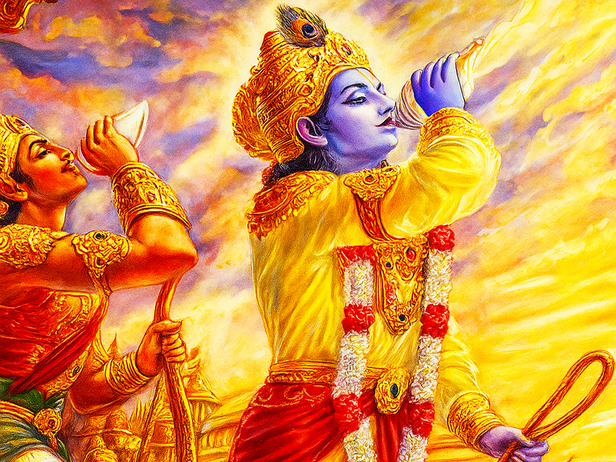
On the other side, both Lord Kṛṣṇa and Arjuna, stationed on a great chariot drawn by white horses, sounded their transcendental conchshells.
15
pāñcajanyaḿ hṛṣīkeśo
devadattaḿ dhanañjayaḥ
pauṇḍraḿ dadhmau mahā-śańkhaḿ
bhīma-karmā vṛkodaraḥ
TRANSLATION
Lord Kṛṣṇa blew His conchshell, called Pāñcajanya; Arjuna blew his, the Devadatta; and Bhīma, the voracious eater and performer of herculean tasks, blew his terrific conchshell, called Pauṇḍra.
16-18
anantavijayaḿ rājā
kuntī-putro yudhiṣṭhiraḥ
nakulaḥ sahadevaś ca
sughoṣa-maṇipuṣpakau
kāśyaś ca parameṣv-āsaḥ
śikhaṇḍī ca mahā-rathaḥ
dhṛṣṭadyumno virāṭaś ca
sātyakiś cāparājitaḥ
drupado draupadeyāś ca
sarvaśaḥ pṛthivī-pate
saubhadraś ca mahā-bāhuḥ
śańkhān dadhmuḥ pṛthak pṛthak
ca mahā-bāhuḥ śańkhān dadhmuḥ pṛthak
pṛthak
TRANSLATION
King Yudhiṣṭhira, the son of Kuntī, blew his conchshell, the Ananta- vijaya, and Nakula and Sahadeva blew the Sughoṣa and Maṇipuṣpaka. That great archer the King of Kāśī, the great fighter Śikhaṇḍī, Dhṛṣṭadyumna, Virāṭa, the unconquerable Sātyaki, Drupada, the sons of Draupadī, and the others, O King, such as the mighty-armed son of Subhadrā, all blew their respective conchshells.
19
sa ghoṣo dhārtarāṣṭrāṇāḿ
hṛdayāni vyadārayat
nabhaś ca pṛthivīḿ caiva
tumulo 'bhyanunādayan
TRANSLATION
The blowing of these different conchshells became uproarious. Vibrating both in the sky and on the earth, it shattered the hearts of the sons of Dhṛtarāṣṭra.
20
atha vyavasthitān dṛṣṭvā
dhārtarāṣṭrān kapi-dhvajaḥ
pravṛtte śastra-sampāte
dhanur udyamya pāṇḍavaḥ
hṛṣīkeśaḿ tadā vākyam
idam āha mahī-pate
TRANSLATION
At that time Arjuna, the son of Pāṇḍu, seated in the chariot bearing the flag marked with Hanumān, took up his bow and prepared to shoot his arrows. O King, after looking at the sons of Dhṛtarāṣṭra drawn in military array, Arjuna then spoke to Lord Kṛṣṇa these words.
21-22
arjuna uvāca
senayor ubhayor madhye
rathaḿ sthāpaya me 'cyuta
yāvad etān nirīkṣe 'haḿ
yoddhu-kāmān avasthitān
kair mayā saha yoddhavyam
asmin raṇa-samudyame
TRANSLATION
Arjuna said: O infallible one, please draw my chariot between the two armies so that I may see those present here, who desire to fight, and with whom I must contend in this great trial of arms.
23
yotsyamānān avekṣe 'haḿ
ya ete 'tra samāgatāḥ
dhārtarāṣṭrasya durbuddher
yuddhe priya-cikīrṣavaḥ
TRANSLATION
Let me see those who have come here to fight, wishing to please the evil- minded son of Dhṛtarāṣṭra.
24
sañjaya uvāca
evam ukto hṛṣīkeśo
guḍākeśena bhārata
senayor ubhayor madhye
sthāpayitvā rathottamam
TRANSLATION
Sañjaya said: O descendant of Bharata, having thus been addressed by Arjuna, Lord Kṛṣṇa drew up the fine chariot in the midst of the armies of both parties.
25
bhīṣma-droṇa-pramukhataḥ
sarveṣāḿ ca mahī-kṣitām
uvāca pārtha paśyaitān
samavetān kurūn iti
TRANSLATION
In the presence of Bhīṣma, Droṇa and all the other chieftains of the world, the Lord said, Just behold, Pārtha, all the Kurus assembled here.
26
tatrāpaśyat sthitān pārthaḥ
pitṝn atha pitāmahān
ācāryān mātulān bhrātṝn
putrān pautrān sakhīḿs tathā
śvaśurān suhṛdaś caiva
senayor ubhayor api
TRANSLATION
There Arjuna could see, within the midst of the armies of both parties, his fathers, grandfathers, teachers, maternal uncles, brothers, sons, grandsons, friends, and also his fathers-in-law and well-wishers.
27
tān samīkṣya sa kaunteyaḥ
sarvān bandhūn avasthitān
kṛpayā parayāviṣṭo
viṣīdann idam abravīt
TRANSLATION
When the son of Kuntī, Arjuna, saw all these different grades of friends and relatives, he became overwhelmed with compassion and spoke thus.
28
arjuna uvāca
dṛṣṭvemaḿ sva-janaḿ kṛṣṇa
yuyutsuḿ samupasthitam
sīdanti mama gātrāṇi
mukhaḿ ca pariśuṣyati
TRANSLATION
Arjuna said: My dear Kṛṣṇa, seeing my friends and relatives present before me in such a fighting spirit, I feel the limbs of my body quivering and my mouth drying up.
29
vepathuś ca śarīre me
roma-harṣaś ca jāyate
gāṇḍīvaḿ sraḿsate hastāt
tvak caiva paridahyate
TRANSLATION
My whole body is trembling, my hair is standing on end, my bow Gāṇḍīva is slipping from my hand, and my skin is burning.
30
na ca śaknomy avasthātuḿ
bhramatīva ca me manaḥ
nimittāni ca paśyāmi
viparītāni keśava
TRANSLATION
I am now unable to stand here any longer. I am forgetting myself, and my mind is reeling. I see only causes of misfortune, O Kṛṣṇa, killer of the Keśī demon.
31
na ca śreyo 'nupaśyāmi
hatvā sva-janam āhave
na kāńkṣe vijayaḿ kṛṣṇa
na ca rājyaḿ sukhāni ca
TRANSLATION
I do not see how any good can come from killing my own kinsmen in this battle, nor can I, my dear Kṛṣṇa, desire any subsequent victory, kingdom, or happiness.
32-35
kiḿ no rājyena govinda
kiḿ bhogair jīvitena vā
yeṣām arthe kāńkṣitaḿ no
rājyaḿ bhogāḥ sukhāni ca
ta ime 'vasthitā yuddhe
prāṇāḿs tyaktvā dhanāni ca
ācāryāḥ pitaraḥ putrās
tathaiva ca pitāmahāḥ
mātulāḥ śvaśurāḥ pautrāḥ
śyālāḥ sambandhinas tathā
etān na hantum icchāmi
ghnato 'pi madhusūdana
api trailokya-rājyasya
hetoḥ kiḿ nu mahī-kṛte
nihatya dhārtarāṣṭrān naḥ
kā prītiḥ syāj janārdana
TRANSLATION
O Govinda, of what avail to us are a kingdom, happiness or even life itself when all those for whom we may desire them are now arrayed on this battlefield? O Madhusūdana, when teachers, fathers, sons, grandfathers, maternal uncles, fathers-in-law, grandsons, brothers-in-law and other relatives are ready to give up their lives and properties and are standing before me, why should I wish to kill them, even though they might otherwise kill me? O maintainer of all living entities, I am not prepared to fight with them even in exchange for the three worlds, let alone this earth. What pleasure will we derive from killing the sons of Dhṛtarāṣṭra?
36
pāpam evāśrayed asmān
hatvaitān ātatāyinaḥ
tasmān nārhā vayaḿ hantuḿ
dhārtarāṣṭrān sa-bāndhavān
sva-janaḿ hi kathaḿ hatvā
sukhinaḥ syāma mādhava
TRANSLATION
Sin will overcome us if we slay such aggressors. Therefore it is not proper for us to kill the sons of Dhṛtarāṣṭra and our friends. What should we gain, O Kṛṣṇa, husband of the goddess of fortune, and how could we be happy by killing our own kinsmen?
37-38
yady apy ete na paśyanti
lobhopahata-cetasaḥ
kula-kṣaya-kṛtaḿ doṣaḿ
mitra-drohe ca pātakam
kathaḿ na jñeyam asmābhiḥ
pāpād asmān nivartitum
kula-kṣaya-kṛtaḿ doṣaḿ
prapaśyadbhir janārdana
TRANSLATION
O Janārdana, although these men, their hearts overtaken by greed, see no fault in killing one's family or quarreling with friends, why should we, who can see the crime in destroying a family, engage in these acts of sin?
39
kula-kṣaye praṇaśyanti
kula-dharmāḥ sanātanāḥ
dharme naṣṭe kulaḿ kṛtsnam
adharmo 'bhibhavaty uta
TRANSLATION
With the destruction of dynasty, the eternal family tradition is vanquished, and thus the rest of the family becomes involved in irreligion.
40
adharmābhibhavāt kṛṣṇa
praduṣyanti kula-striyaḥ
strīṣu duṣṭāsu vārṣṇeya
jāyate varṇa-sańkaraḥ
TRANSLATION
When irreligion is prominent in the family, O Kṛṣṇa, the women of the family become polluted, and from the degradation of womanhood, O descendant of Vṛṣṇi, comes unwanted progeny.
41
sańkaro narakāyaiva
kula-ghnānāḿ kulasya ca
patanti pitaro hy eṣāḿ
lupta-piṇḍodaka-kriyāḥ
TRANSLATION
An increase of unwanted population certainly causes hellish life both for the family and for those who destroy the family tradition. The ancestors of such corrupt families fall down, because the performances for offering them food and water are entirely stopped.
42
doṣair etaiḥ kula-ghnānāḿ
varṇa-sańkara-kārakaiḥ
utsādyante jāti-dharmāḥ
kula-dharmāś ca śāśvatāḥ
TRANSLATION
By the evil deeds of those who destroy the family tradition and thus give rise to unwanted children, all kinds of community projects and family welfare activities are devastated.
43
utsanna-kula-dharmāṇāḿ
manuṣyāṇāḿ janārdana
narake niyataḿ vāso
bhavatīty anuśuśruma
TRANSLATION
O Kṛṣṇa, maintainer of the people, I have heard by disciplic succession that those who destroy family traditions dwell always in hell.
44
aho bata mahat pāpaḿ
kartuḿ vyavasitā vayam
yad rājya-sukha-lobhena
hantuḿ sva-janam udyatāḥ
TRANSLATION
Alas, how strange it is that we are preparing to commit greatly sinful acts. Driven by the desire to enjoy royal happiness, we are intent on killing our own kinsmen.
45
yadi mām apratīkāram
aśastraḿ śastra-pāṇayaḥ
dhārtarāṣṭrā raṇe hanyus
tan me kṣemataraḿ bhavet
TRANSLATION
Better for me if the sons of Dhṛtarāṣṭra, weapons in hand, were to kill me unarmed and unresisting on the battlefield.
46
sañjaya uvāca
evam uktvārjunaḥ sańkhye
rathopastha upāviśat
visṛjya sa-śaraḿ cāpaḿ
śoka-saḿvigna-mānasaḥ
TRANSLATION
Sañjaya said: Arjuna, having thus spoken on the battlefield, cast aside his bow and arrows and sat down on the chariot, his mind overwhelmed with grief.